How to dropship: steps, costs and tips for beginners
Learn how to dropship, pick winning products, and start selling without buying stock.
September 2023 | Published by Xero
Written by Lena Hanna—Trusted CPA Guidance on Accounting and Tax. Read Lena's full bio
Published Wednesday 1 April 2026
Table of contents
Key takeaways
- Choose reliable suppliers who offer quality products, competitive prices, automated integration with your store, and white-labelling services to ensure smooth order fulfilment and maintain your brand identity.
- Budget for both startup costs (USD 100-500 minimum) and ongoing expenses like transaction fees, platform subscriptions, and returns, as most successful dropshipping stores invest USD 5,000-10,000 in their first few months.
- Focus on a specific market niche that matches your interests and customer demand, using tools like Google Trends to identify growing opportunities and unique products that help you stand out from competitors.
- Build customer trust through prompt responses to enquiries, clear return policies, and professional complaint handling, as you're responsible for the entire customer experience even though suppliers handle fulfilment.
What is dropshipping?
Dropshipping is a retail method where you sell products online without holding inventory. When a customer places an order, your supplier ships the product directly to them.
This model eliminates warehousing and shipping logistics from your responsibilities, a key reason why over 27% of retailers use dropshipping to fulfil orders.
You focus on running your store, marketing your products, and processing orders while your supplier handles fulfilment.
Dropshipping takes several forms. Wholesale dropshipping partners you with wholesalers for broad product testing. Print on demand creates custom items like t-shirts after each order. Retail dropshipping sources from retailers for quick product testing, though margins are tighter.
The dropshipping market is growing fast, with one report projecting it will grow from USD 343 billion in 2026 to USD 1.84 trillion by 2035. While startup costs are low and entry is straightforward, competition is fierce and profit margins tend to be tight.
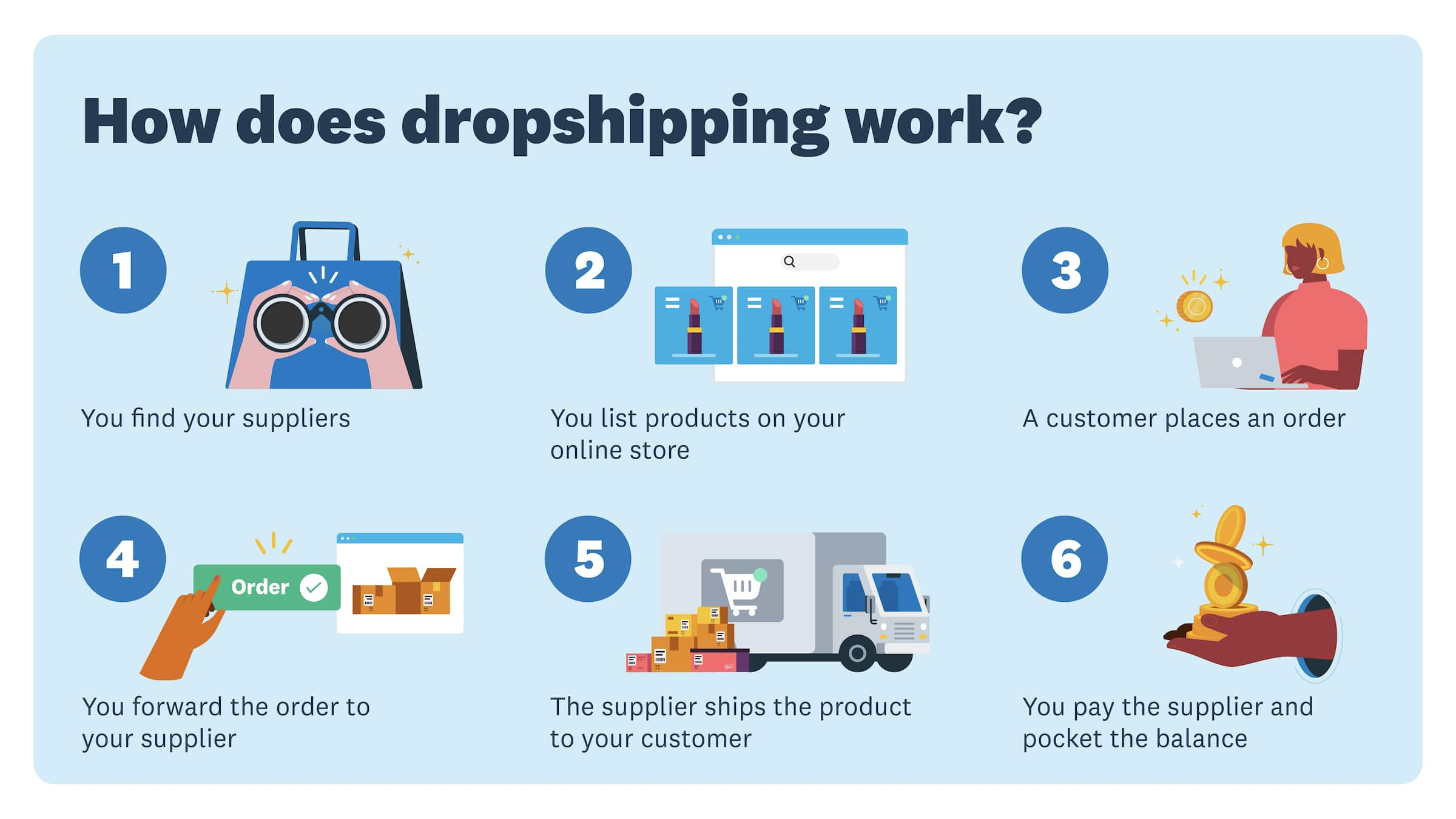
How does dropshipping work?
Here's how the dropshipping process works from start to finish.
- A customer places an order: When a customer orders something, the payment is made directly to you, the dropshipper. You're now in charge of the transaction, so it's your responsibility to manage refunds and resolve disputes.
- You forward the order to your supplier: Send the order details to your supplier, including the customer's address, product specifications (size, colour, and so on), and any special requests.
- The supplier ships the product to your customer: The supplier packages and ships the product directly to your customer.
- You pay the supplier and pocket the balance: Pay the supplier the agreed wholesale cost and any shipping fees. The difference between what the customer paid and your costs is your profit.
Is dropshipping legal and legitimate?
Yes, dropshipping is a legal business model in most countries. You're acting as a retailer who partners with suppliers to fulfil orders, which is a standard retail practice.
However, running a legitimate dropshipping business requires:
- Business registration: register your business according to local requirements
- Tax compliance: collect and remit sales tax where required. In the United States, for example, payment platforms may be required to file Form 1099-K with the IRS if you meet certain thresholds.
- Truthful marketing: accurately describe products and delivery times
- Consumer protection: honour return policies and resolve disputes fairly
Dropshipping differs from pyramid schemes because you sell real products to customers rather than recruiting others to join a programme. Your income comes from product sales, not recruitment fees.
Dropshipping pros and cons
Let's look at dropshipping benefits and drawbacks.
Dropshipping benefits
Dropshipping offers several advantages for new business owners. Here are the key benefits to consider:
- Scalability: outsource inventory and logistics to focus on growing your product range, marketing, and customer service
- Location flexibility: run your business from anywhere with an internet connection
- Lower startup costs: pay suppliers only after making sales, eliminating large upfront inventory investments
- Reduced overheads: avoid warehousing, storage, and inventory management expenses
- Better cash flow: receive customer payments before paying suppliers, keeping funds available for growth
- Lower environmental impact: reduce waste from unsold stock and cut emissions with fewer transportation steps
Dropshipping drawbacks
Dropshipping also comes with challenges to consider. Understanding these drawbacks helps you prepare for potential obstacles:
- Complex shipping: multiple suppliers make delivery times unpredictable, and international orders may face delays and extra fees
- Tight profit margins: no bulk discounts mean smaller margins, leaving less budget for marketing and growth. A strong benchmark for net profit margin ranges from 5% to over 20%, depending on the niche.
- Intense competition: low barriers to entry create fierce competition, and some analyses suggest only 1–5% of dropshippers ever reach consistent profitability.
- Supplier dependence: customers blame you for supplier issues like quality problems, shipping delays, or damaged packaging
- Branding limitations: many suppliers don't offer white-labelling, creating a disconnect when customers receive generic packaging
How much does it cost to start dropshipping?
You can start a dropshipping business for USD 100 to 500, though research suggests most successful dropshipping stores invest USD 5,000 to 10,000 or more in their first few months.
Essential startup costs include:
- Domain name: USD 10–20 per year
- E-commerce platform: USD 29–79 per month. For example, the basic Shopify plan costs USD 29 per month when paid annually.
- Product samples: USD 50–200 to test supplier quality. For products in the USD 20–50 retail range, sample orders typically cost between USD 50 to 100 including shipping.
- Initial marketing: USD 100–500 for ads and content
Can you start with USD 1,000?
Yes, USD 1,000 covers basic setup and initial advertising. Focus on one to two products, test your ads carefully, and reinvest profits to scale.
Can you start with USD 0?
Not realistically. While some platforms offer free trials, you'll need funds for a domain, product samples, and marketing to attract your first customers.
Hidden costs to plan for
Budget for ongoing expenses beyond setup. These costs can add up quickly if you don't plan for them:
- Transaction fees: 2–3% per sale from payment processors
- Platform apps: USD 10–50 monthly for essential store features
- Returns and refunds: set aside 5–10% of revenue for customer service costs
How to start dropshipping
Starting a dropshipping business requires four key steps: finding your niche, choosing suppliers, building your store, and planning your marketing.
- Find your market niche: Choose a market segment that matches your interests and meets customer demand. Use Google Trends to spot growing opportunities, and search Amazon or eBay for in-demand products. Unique, hard-to-find items help you stand out from competitors. Here's some guidance on market research.
Top five dropshipping tips
Success in dropshipping requires flexibility, attention to detail, and consistent execution. Here are five tips to help your startup thrive:
- Know your customer: cater to specific needs and become the go-to store in your niche
- Build trust: respond to enquiries promptly, maintain clear return policies, and handle complaints professionally
- Vet your suppliers: request samples, monitor customer feedback, and ensure suppliers resolve issues quickly
- Stay organised: keep accurate financial records, manage cash flow, and stay current on tax obligations
- Stay passionate: enthusiasm keeps you motivated and resonates with customers
Streamline your dropshipping business with Xero
Xero's accounting software simplifies financial management for dropshipping businesses. Key features include:
- E-commerce integration: connect directly with your online store platforms
- Real-time cash flow forecasting: track money in and out as orders process
- Multi-currency support: manage international sales seamlessly
Explore more tools in the Xero App Store, or get one month free to see how Xero supports your dropshipping business.
FAQs on dropshipping
Here are answers to common questions about starting a dropshipping business.
Can I start dropshipping with no money?
No, starting with zero funds is unrealistic. You'll need money for essentials like a domain name, web hosting, and initial marketing, though total startup costs remain low compared to traditional retail.
How much do dropshippers make?
Earnings vary widely. Based on an analysis of 1,200+ dropshipping stores, monthly income typically ranges from under USD 2,000 for beginners to over USD 50,000 for advanced sellers. Your income depends on your niche, market demand, profit margins, and competition level.
What is the best dropshipping platform?
The best platform depends on your business needs. Popular options include:
- Spocket: connects you with US and European suppliers offering fast shipping
- Modalyst: offers a wide product range including unique brands and print-on-demand options
- DSers: partners with AliExpress for low-price suppliers and bulk order capabilities
Disclaimer
Xero does not provide accounting, tax, business or legal advice. This guide has been provided for information purposes only. You should consult your own professional advisors for advice directly relating to your business or before taking action in relation to any of the content provided.
Start using Xero for free
Access Xero features for 30 days, then decide which plan best suits your business.